Located in southwestern Arizona along the Colorado River, Yuma is home to more than 103,000 residents and one of the youngest median ages in the state, at around 32 years old. With affordable housing, abundant sunshine, and a strong sense of community, Yuma attracts families, professionals, seasonal residents, and retirees alike. Reliable high-speed internet plays a critical role in supporting both daily life and the region’s diverse economy.
A Diverse, Internet-Driven Economy
Agriculture powerhouse
Yuma is widely known as the Winter Vegetable Capital of the United States. According to a 2024 University of Arizona study, local farms generated $1.3 billion in direct sales in 2022, while the broader agriculture and agribusiness sector contributed $4.4 billion to Arizona’s economy. The county supplies an estimated 80–90% of the nation’s leafy greens during winter, supporting thousands of jobs across farming, processing, transportation, and logistics. Reliable internet is essential for modern agriculture, inventory tracking, logistics coordination, and communication across supply chains.
Cross-border trade and logistics
With two nearby ports of entry in San Luis, Yuma serves as a vital connection between U.S. and Mexican markets. Interstate 8, Union Pacific rail lines, and Yuma International Airport link the region to major hubs like Los Angeles, Tucson, Phoenix, and Dallas. Businesses involved in shipping, cold storage, customs brokerage, and transportation rely on dependable internet to keep operations running smoothly.
Defense and military operations
Yuma Proving Ground and Marine Corps Air Station Yuma employ more than 10,000 service members and civilian personnel. These installations depend on secure, high-speed connectivity for training, testing, communications, and data transfer, making reliable internet a necessity rather than a luxury.
Tourism and recreation
From historic downtown Yuma and Main Street cafés to the Territorial Prison State Historic Park, winter festivals, and outdoor recreation along the river, tourism is a major economic driver. Hotels, restaurants, and local businesses depend on fast internet to manage reservations, process payments, and provide guest Wi-Fi.
Growing residential communities
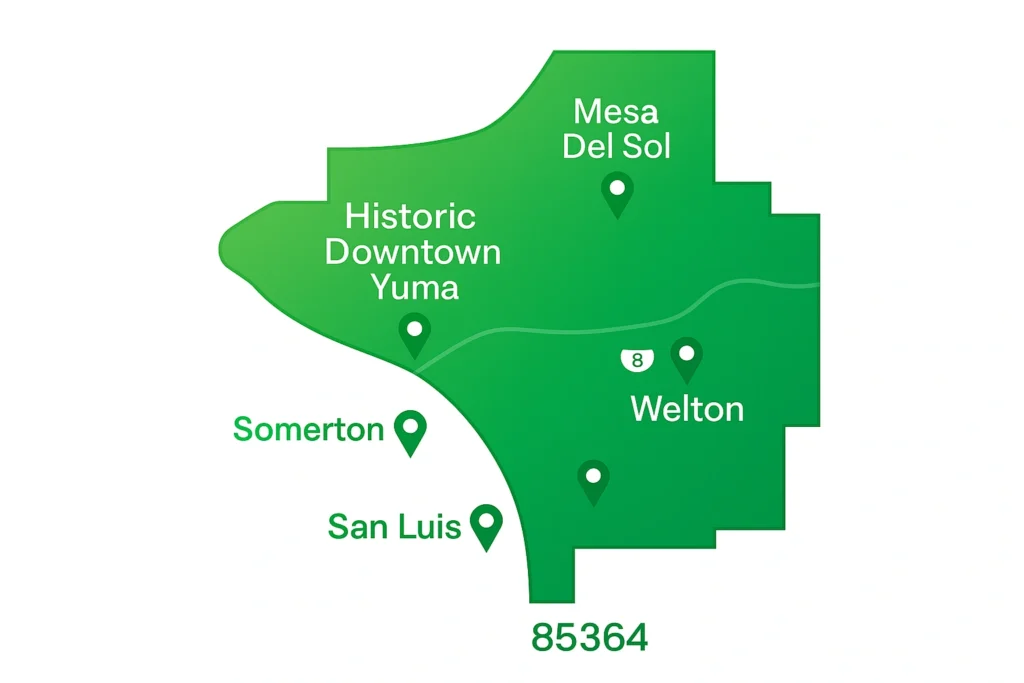
Neighborhoods like Mesa Del Sol and Fortuna Foothills, along with nearby cities such as Somerton and San Luis, continue to grow. These communities attract young families, seasonal workers, and retirees who rely on strong home internet for remote work, education, entertainment, and staying connected with family.